

Ever feel like your financial goals are just out of reach? You’re not alone. Setting and achieving financial goals can be overwhelming, especially with so many distractions and challenges along the way.  But imagine waking up every day with a clear financial roadmap, knowing exactly what you need to do to achieve your dreams—whether it’s buying a home, building a robust savings account, or enjoying a comfortable retirement.
In this step-by-step guide, we’ll show you how to set and achieve financial goals that are not only realistic but also tailored to your lifestyle. We’ll break down the process into simple, actionable steps that anyone can follow—no matter your financial situation. 
The good news? You don’t need to be an expert to get started. Whether you’re a complete beginner or looking to refine your financial strategy, this guide will provide you with the tools and insights to turn your goals into reality. Keep reading to discover how small, intentional changes today can lead to major financial success tomorrow. 
Why Financial Goals Matter: The Foundation of Financial Success
Setting financial goals is the first step in taking control of your money and building a future that’s financially secure. Without clear goals, it’s easy to feel lost, overwhelmed, or unsure about where your money is going. But when you set specific, measurable financial goals, you’re giving yourself direction and purpose.
They Give You a Roadmap
Financial goals act as a roadmap, guiding you to where you want to be. Whether it’s saving for a vacation, paying off debt, or building a retirement fund, goals help you focus your time, energy, and money on what truly matters. Instead of feeling scattered, you’ll know exactly what steps to take next. 

They Motivate You
One of the biggest challenges in personal finance is staying motivated. It’s easy to get sidetracked by life’s everyday demands. But having clear goals keeps you motivated and gives you a reason to stay committed. Knowing you’re working toward something meaningful makes it easier to cut back on unnecessary spending and stay disciplined. 
They Help You Make Smarter Financial Decisions
When you have financial goals, you make better decisions about your money. You start thinking long-term and asking, “Will this purchase help me reach my goal?” instead of making impulse buys that hinder progress. A goal-focused approach ensures that every dollar spent is working toward your financial future. 
They Provide Accountability
Setting financial goals creates accountability. Whether you’re tracking your progress on your own or sharing your goals with a trusted friend or family member, having someone to hold you accountable makes a huge difference. It keeps you focused and less likely to give up, especially when things get tough. 
They Improve Financial Confidence
When you start seeing the progress you’re making toward your goals, your confidence grows. Financial success doesn’t happen overnight, but as you check off milestones, you’ll feel more empowered and capable of managing your money effectively. Confidence leads to more decisive action, which accelerates your progress. 
In summary, setting financial goals isn’t just a nice idea—it’s essential for financial success. They provide structure, motivation, better decision-making, accountability, and a boost in confidence. So, let’s dive in and start setting goals that will change your financial future! 
Step 1: Define Your Financial Goals Clearly
The first step toward financial success is defining your goals clearly. Without a clear goal in mind, it’s easy to lose focus and drift aimlessly. So, how do you set financial goals that are not only meaningful but also achievable? Let’s break it down. 
Be Specific and Clear
A goal like “save money” sounds great, but it’s too vague. To make progress, you need to be specific. Ask yourself: What exactly do I want to achieve? How much do I need? By when?
For example, instead of saying “save money,” say “save $5,000 for an emergency fund by the end of the year.” This gives you a clear target and a deadline to work with. 

Make Your Goals Measurable
It’s essential to make your goals measurable so you can track your progress. If you don’t measure, it’s hard to know how far you’ve come or when you’ve reached your goal.
For instance, rather than saying “reduce debt,” try “pay off $2,000 in credit card debt within six months.” This way, you can track how much you’ve paid off each month and adjust your budget as needed. 
Ensure Your Goals Are Achievable
While it’s great to dream big, it’s important to keep your goals realistic. If you set a goal that’s too far out of reach, you risk feeling overwhelmed or discouraged.
For example, if you’re new to saving, don’t aim to save $50,000 in a month. Start with something achievable, like saving $500 each month, and gradually increase it as your financial situation improves.
Make Your Goals Relevant
Ensure that your goals align with your values and long-term vision. Ask yourself: Is this goal truly important to me? Will it help improve my financial future?
If your goal is to buy a new car but you’re deep in student loan debt, it might make more sense to focus on paying off that debt first. Stay focused on goals that will bring you closer to financial security and happiness. 

Set a Timeframe
A goal without a deadline can easily get lost in the shuffle. Set a timeframe for each goal to give yourself a sense of urgency and accountability. A clear deadline helps you stay on track and adjust your approach if necessary.
For example, instead of “save for retirement,” try “save $500 per month for retirement for the next five years.” This gives you both a target amount and a time frame to achieve it. 
Step 2: Assess Your Current Financial Situation
Before you can effectively set and achieve your financial goals, it’s crucial to understand where you stand financially. Assessing your current situation helps you identify what’s working and where you need to improve. Let’s break it down into manageable steps. 
Track Your Income
Start by taking a close look at your sources of income. This includes your salary, side gigs, investment income, or any other streams of money you receive.
- Tip: If you have multiple income sources, calculate your monthly total to get a clear picture of what you’re working with.


Analyze Your Expenses
Next, list all your monthly expenses. This can include rent, utilities, groceries, entertainment, subscriptions, debt payments, and savings.
- Tip: Use an app like Mint or YNAB (You Need A Budget) to track your spending automatically. This helps you see where your money is going and identify areas to cut back.
Calculate Your Net Worth
Your net worth is the difference between your assets (things you own, like savings, investments, and property) and liabilities (things you owe, like loans and credit card debt).
- Formula:
Net Worth = Assets – Liabilities- Positive net worth? Great!
- Negative net worth? It’s time to focus on reducing debt and building savings.
Identify Your Debts
Take a detailed look at your debts. List them out by type (credit cards, loans, mortgages) and their interest rates. This will help you prioritize which debts to pay off first.
- Tip: Pay off high-interest debts (like credit cards) before low-interest ones (like student loans) to save money in the long run.

Set Aside an Emergency Fund
Before aggressively pursuing financial goals, it’s essential to have an emergency fund in place. This fund should cover 3-6 months of living expenses and act as a safety net for unexpected situations.
- Tip: Start by saving a small amount each month until you reach your emergency fund goal.

Step 3: Break Down Your Goals into Manageable Milestones
Now that you’ve set your financial goals and assessed your current situation, it’s time to break those big goals down into smaller, more manageable milestones. This makes the process less overwhelming and helps you stay motivated as you check off each step. Let’s dive into how you can create a clear, actionable plan.
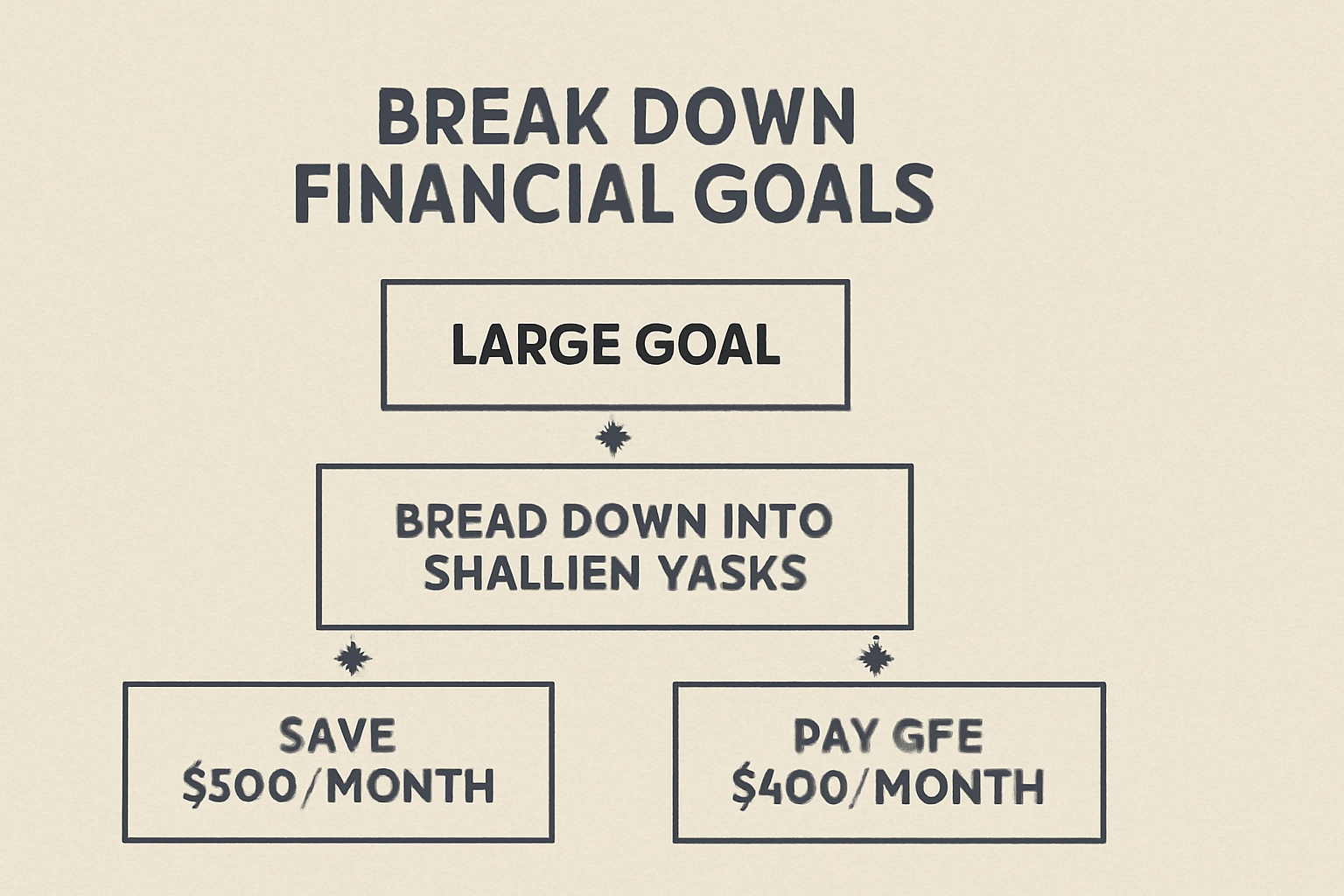
Break Large Goals into Smaller Tasks
When you set a big goal—like saving $10,000 for a vacation—it can feel daunting. But breaking it down into smaller, bite-sized chunks makes it more achievable.
For example, if you want to save $10,000 in a year, that’s about $834 per month. Now, it’s a goal you can track and work toward, month by month.
Set Monthly or Weekly Milestones
Divide your larger goal into monthly or even weekly milestones. This keeps your progress measurable and keeps you on track. For example, if you’re aiming to pay off $5,000 in credit card debt by the end of the year, aim to pay off around $400 each month.
- Tip: Break down larger savings goals into weekly targets to make it feel even more manageable. For example, $834 per month becomes roughly $208 per week.

Create Actionable Tasks
Now that you have your milestones, it’s time to create specific, actionable tasks. What can you do each day or week to stay on track with your financial milestones? These tasks might include:
- Cutting back on eating out.
- Setting up automatic transfers to your savings account.
- Finding ways to increase your income, like a side hustle.
These small steps add up over time and keep you moving forward. 
Track Your Progress Regularly
Regular tracking is key to staying motivated and adjusting your approach when needed. Use a simple spreadsheet or an app to monitor your milestones and celebrate your achievements along the way.
- Tip: Set a weekly or monthly check-in to assess your progress and make adjustments as needed.

Step 4: Create an Action Plan for Your Goals
Creating an action plan is where the rubber meets the road. Now that you’ve defined your goals, broken them down into manageable milestones, and assessed your current financial situation, it’s time to put everything into motion. A clear, well-thought-out action plan will guide you every step of the way. Let’s dive into how to create one that’s effective and achievable.
Build a Realistic Budget
A budget is the foundation of your financial action plan. It helps you allocate funds toward your goals and track your spending. Without a solid budget, it’s easy to overspend and derail your progress.
- Tip: Use the 50/30/20 rule:
- 50% of your income goes to needs (rent, utilities, groceries).
- 30% goes to wants (entertainment, dining out).
- 20% goes toward savings or debt repayment.

Automate Your Savings
One of the best ways to stay consistent with your financial goals is to automate your savings. Set up automatic transfers from your checking account to your savings or investment accounts.
- Tip: Schedule transfers right after payday so you’re saving before you have the chance to spend. This helps you stick to your goals without thinking about it.
Focus on High-Interest Debt First
If paying off debt is part of your goals, prioritize high-interest debt (like credit cards) first. These debts cost you the most over time, so eliminating them faster will save you money in the long run.
- Tip: Consider using the debt snowball or avalanche method:
- Snowball: Pay off the smallest debt first for quick wins.
- Avalanche: Pay off the highest-interest debt first for long-term savings.
Start Investing (Even Small Amounts)
Once your emergency fund is in place and high-interest debts are tackled, consider investing to grow your money over time. You don’t need to be a pro to start—begin with low-cost index funds or a robo-advisor that automates your investments.
- Tip: Start small and increase your investments as your confidence and income grow. Even $50 a month can make a difference over time.
Set Up Accountability
Stay on track by involving others in your financial journey. Share your goals with a trusted friend or family member who can hold you accountable. You might also join online communities or hire a financial coach to provide regular check-ins and advice.
- Tip: Accountability partners can give you that extra motivation to push through tough times.

Monitor and Adjust Your Plan
Your financial plan shouldn’t be static. Life changes, and so will your financial situation. Review your plan monthly or quarterly to track your progress and make adjustments if needed. Are you meeting your milestones? If not, adjust your budget or savings strategies to get back on track.
- Tip: Set a reminder to review your financial plan every 3 months. This keeps you engaged and on course.

Step 5: Stay Accountable and Adjust Your Plan When Necessary
Staying on track with your financial goals requires more than just setting them up—it’s about consistently working toward them and being flexible enough to adjust when life changes. In this step, we’ll explore how to stay accountable and fine-tune your plan along the way. 
Find an Accountability Partner
One of the best ways to stay committed to your goals is to have someone hold you accountable. Whether it’s a friend, family member, or a financial coach, sharing your goals with someone else gives you that extra push to keep going.
- Tip: Regularly update your accountability partner on your progress. Share your wins and challenges so they can offer support or advice when needed.

Track Your Progress Regularly
Make tracking your progress a habit. Set aside time each week or month to check in on your goals. Are you hitting your milestones? Are there any obstacles slowing you down?
- Tip: Use budgeting and goal-tracking apps like Mint or YNAB to automatically track your progress and keep you motivated.

Celebrate Small Wins
As you reach your financial milestones, take time to celebrate! Acknowledging your progress—no matter how small—boosts your morale and keeps you motivated to keep going.
- Tip: Treat yourself to something small, like a night out or a relaxing weekend, when you reach a milestone. Positive reinforcement keeps the journey enjoyable!

Be Flexible and Adjust When Needed
Life happens, and sometimes your plan needs to be adjusted. Unexpected expenses, changes in income, or new financial goals can throw you off course. That’s okay!
- Tip: If you miss a milestone or find that your goals are no longer aligned with your current situation, don’t be afraid to adjust your plan. Flexibility is key to long-term success.
Revisit Your Goals Periodically
Your financial goals might evolve as you achieve them or as your life circumstances change. Review your goals regularly—every 3-6 months—and adjust them based on your progress or any new priorities you have.
- Tip: Take a moment to reevaluate your long-term goals, like retirement or homeownership, and make sure they still align with your values. If necessary, set new short-term goals to keep pushing forward.

Common Pitfalls to Avoid While Setting Financial Goals
Setting financial goals can be an exciting journey, but there are a few common mistakes that can derail your progress. Being aware of these pitfalls will help you stay on track and set yourself up for success. Let’s dive into the most common mistakes and how to avoid them. 

Setting Unrealistic Goals
While it’s great to dream big, setting goals that are too ambitious can lead to frustration and burnout. For example, if you’re currently struggling to save $500 a month, aiming to save $5,000 a month could be unrealistic.
- Tip: Start with small, achievable goals and gradually increase the difficulty as you build momentum. Aim for progress, not perfection.
Focusing Only on Short-Term Goals
It’s easy to get caught up in short-term goals like buying a new gadget or going on vacation. But neglecting long-term goals, like retirement or paying off your mortgage, can hurt your financial future.
- Tip: Make sure you balance short-term and long-term goals. Create a plan that addresses both—this way, you’re securing your future while enjoying the present.

Not Having a Clear Plan for Tracking Progress
A goal without a way to track progress is just a wish. Without a clear plan, it’s easy to lose sight of your objectives or fail to notice when you’re off course.
- Tip: Use tools like budgeting apps, spreadsheets, or financial planners to track your progress regularly. Check in with your goals at least once a month to see how you’re doing.
Ignoring Emergency Savings
Many people focus on investing or paying off debt but forget the importance of having an emergency fund. Without it, unexpected expenses like medical bills or car repairs can throw you off course.
- Tip: Before aggressively pursuing other financial goals, prioritize building an emergency fund. Aim for 3-6 months of living expenses.
Neglecting the Power of Compound Interest
If you’re not investing, you’re missing out on the power of compound interest. By not putting your money to work in the stock market, real estate, or other investment options, you’re limiting your financial growth.
- Tip: Start investing early—even small amounts can grow significantly over time. Set up automatic contributions to your retirement or investment accounts.
Being Too Hard on Yourself
Finally, don’t be too hard on yourself if you encounter setbacks. Financial goals can take time to achieve, and life happens. It’s important to remain flexible and patient.
- Tip: If you fall behind or face challenges, take a deep breath and reassess. Adjust your plan as needed, but don’t give up! Celebrate the small wins and keep moving forward.
Build Credit Together
Building credit is a crucial part of your financial journey. Whether you’re planning for a major purchase like a house or car or simply looking to improve your financial standing, strong credit is key. If you’re in a partnership, whether with a spouse, family member, or business partner, building credit together can make a huge difference. Let’s explore how you can do it effectively! 
Understand the Importance of Credit
Credit scores affect many aspects of life: loan approvals, interest rates, and even some job opportunities. A good credit score opens the door to better financial options, while a poor one can limit your choices.
- Tip: Check your credit report regularly to stay informed about your score and any discrepancies. You’re entitled to a free report from each of the three major credit bureaus once a year.
Consider Joint Accounts or Authorized User Status
If you’re in a partnership, one way to build credit together is by opening joint accounts or adding each other as authorized users on credit cards. This allows both individuals to benefit from the positive payment history, improving your credit profiles.
- Tip: Make sure both parties have a good understanding of managing credit responsibly. Late payments can negatively impact both credit scores.
Set Clear Financial Goals Together
Just like with individual financial goals, setting clear goals as a couple or team can help both of you stay aligned. Whether it’s saving for a home, paying off debt, or improving your credit score, having a shared objective makes it easier to stay motivated and work together.
- Tip: Create a budget that prioritizes paying down debt and increasing credit utilization rates responsibly.

Pay Bills on Time, Every Time
One of the most important factors in building credit is your payment history. Timely payments demonstrate financial responsibility and have a significant positive impact on your credit score.
- Tip: Set up automatic payments or reminders to avoid missing due dates. A simple strategy like this can make all the difference.

Keep Credit Utilization Low
Credit utilization—the ratio of your credit card balances to your credit limits—plays a major role in your credit score. Ideally, you want to keep this below 30%.
- Tip: Pay off credit card balances in full each month or spread your expenses across multiple cards to maintain a low utilization ratio.
Setting and achieving financial goals is a journey, not a destination. By following the steps outlined in this guide—defining your goals clearly, assessing your financial situation, breaking down goals into manageable milestones, creating a solid action plan, and staying accountable—you’ll be well on your way to building a secure financial future.
Remember, it’s not about perfection; it’s about making consistent, intentional progress. Life will throw curveballs, but with a clear plan and the right mindset, you can adapt and stay on track.
Whether you’re saving for a rainy day, paying off debt, or planning for retirement, every step you take brings you closer to your financial dreams. Stay flexible, celebrate the small wins, and continue to adjust your plan as your life evolves. 
Start today, and take control of your financial future. The road to financial success is within your reach, and with the right approach, you can achieve the financial freedom you’ve always wanted.